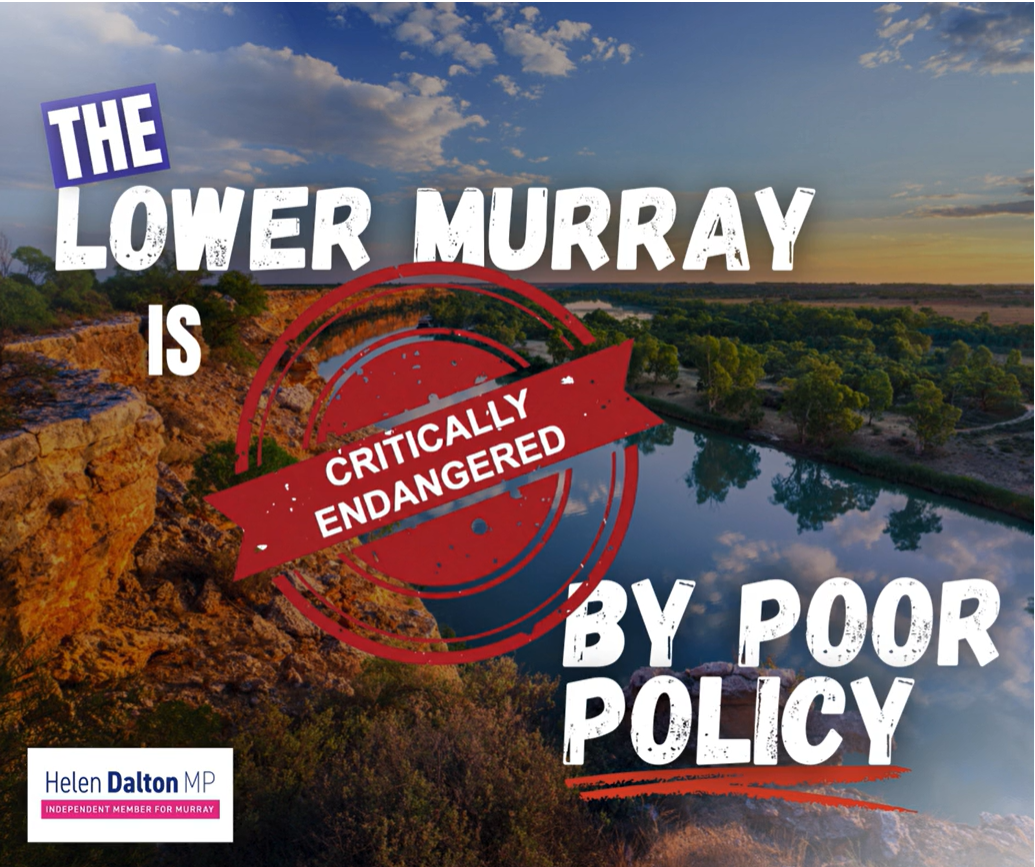
For years, the response has been the same: buy back more irrigation water upstream and push it down the system to meet artificial targets at the end of the river. Billions have been spent. The results speak for themselves.
The Murray Mouth still cannot be kept open without dredging.
High-flow targets at the South Australian border are routinely missed.
Floodplains are not being inundated as promised.
This isn’t because communities aren’t sacrificing enough. It’s because the water cannot physically be delivered as the plan assumes. Water stored hundreds of kilometres upstream is lost through constraints, attenuation and evaporation long before it ever reaches the Lower Lakes, the Coorong or the Mouth. Independent modelling has already confirmed that even relaxing river constraints does not increase meaningful flows at the border.
Yet instead of confronting this reality, policy has doubled down — removing productive water from regional communities to chase outcomes the system cannot achieve.
That is how you end up with a river listed as endangered by the very plan meant to save it.
Meanwhile, real causes of decline are sidelined: invasive carp, degraded catchments, declining water quality, salinity, and decades-old drainage decisions that continue to starve parts of the Coorong. These problems don’t disappear by flushing more water past towns and farms.
The result is predictable. Irrigators are blamed. Communities weaken. Trust collapses.
If leaders are serious about protecting the Lower Murray and the people who depend on it, the answer is not more of the same. It is transparency, accountability, and an honest reckoning with what has gone wrong.
That means a Federal Royal Commission into water management and the Murray–Darling Basin Plan — and an immediate halt to further damage being locked in under current settings while that work is done.
A river does not become critically endangered overnight.
This one has been pushed there by policy.